How to Build an Effective SEO Content Strategy
Build an SEO Content Strategy Around Real Business Goals
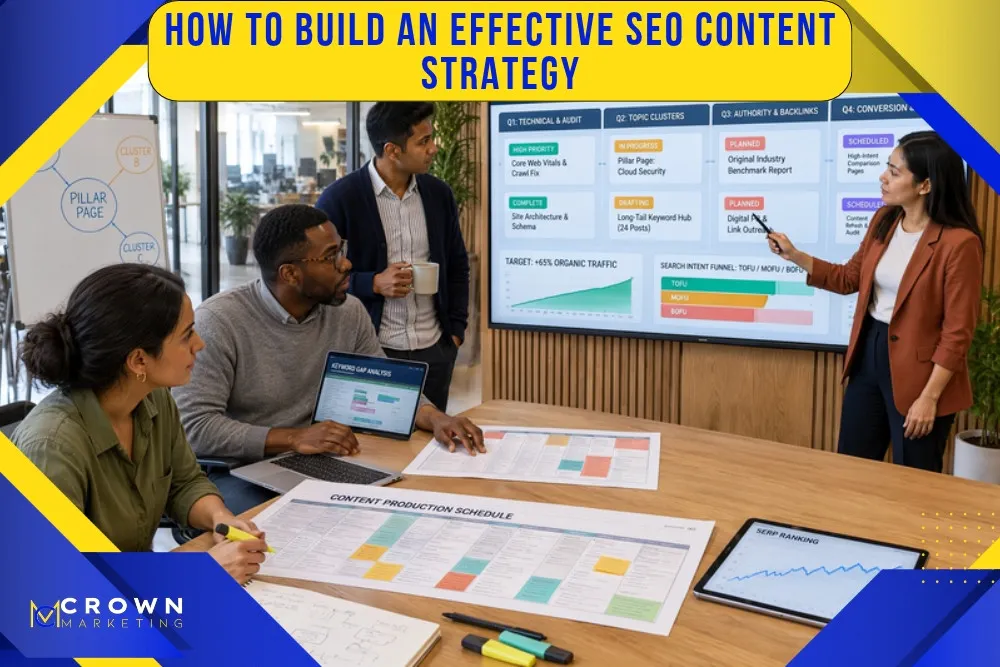
Crown Marketing approaches an SEO content strategy as a business system, not a calendar filled with random topics. The goal is to create useful pages that answer the questions real customers ask, support the services a company wants to sell, and give search engines a clear picture of the site’s expertise. When those pieces work together, content can attract qualified traffic long after the initial publishing date.
Strong content marketing starts with focus. A business needs to know which audiences matter, what problems those people are trying to solve, and what action should happen after they land on a page. A useful strategy connects every article to a larger path, such as learning about a problem, comparing options, visiting a service page, and contacting the company. This keeps the content helpful without turning every paragraph into a sales pitch.
Consistency also matters. Publishing one strong article and then stopping rarely builds momentum. A practical plan creates a repeatable process for research, writing, review, publishing, and improvement. That process makes it easier to protect quality while steadily expanding the number of relevant searches a website can answer.
The plan should also reflect the resources available to maintain it. An ambitious calendar can fail when subject experts cannot review drafts or when no one owns updates. Set a pace that leaves room for research, editing, design, publishing, and performance review. A smaller dependable program creates more value than a large schedule that produces rushed work.
Define Search Intent Audience and SEO Content Goals
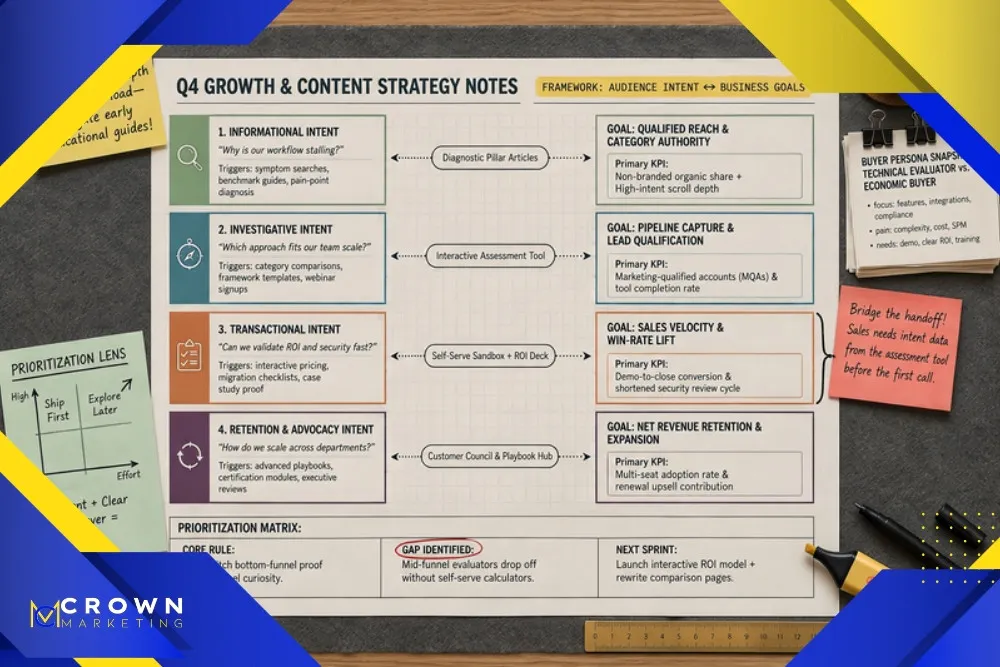
Before selecting titles, clarify what the reader expects to find. Search intent explains whether someone wants a quick answer, a detailed guide, a comparison, or a provider. Matching the format and depth to that intent improves usefulness and gives the page a better chance to earn engagement.
Use a short planning brief for every major topic. It should identify the audience, the core question, the desired action, and the business value. The following checks keep planning grounded:
- Name the primary audience in specific terms. A local service buyer, an existing customer, and an industry researcher may use similar words but need very different explanations and next steps.
- Choose one main search intent for the page. Trying to serve informational, transactional, and comparison intent equally can make the article feel unfocused and difficult to navigate.
- Connect the topic to a measurable business goal. Useful goals include qualified organic visits, service page clicks, consultation requests, email signups, or stronger visibility for a priority offering.
- Review the current search results to understand the expected depth and format. Look for missing explanations, weak examples, or local context that could make the new page more useful.
- Set a clear next action for readers. The action should feel like the natural continuation of the information, not an interruption that appears before the reader has enough context.
Keyword research supports this planning, but keywords are not the entire strategy. The best topic usually sits where customer questions, business priorities, and realistic search opportunities overlap. That combination produces content that can rank and also contribute to revenue.
Document the assumptions behind each topic. If a page is meant to support a service, attract a local audience, or answer a common objection, note that purpose in the brief. Later, the team can compare actual search behavior and conversions with the original goal instead of deciding success by traffic alone.
Create Topic Clusters That Build Search Authority
A connected group of pages is usually more useful than isolated posts. Start with a broad service or subject, then map the supporting questions that customers ask before, during, and after a purchase. Those supporting articles can link to the main page and to one another when the relationship is genuinely helpful.
A topic cluster should cover the customer journey without repeating the same article under slightly different titles. Use these planning rules:
A useful cluster map also identifies the role of each page before drafting begins. The central page should cover the broad decision, while supporting posts answer narrower questions, explain individual steps, or compare related options. This hierarchy helps readers move from an early question toward a practical solution without forcing them through duplicate explanations.
Review the map from the reader’s perspective. A first time visitor should be able to understand where to begin, what to read next, and how the information connects. From a search perspective, the same structure gives crawlers consistent signals about priority pages and subject relationships. Thoughtful navigation, breadcrumbs, and contextual links reinforce that organization.
Well planned clusters also make future decisions easier. When a new topic appears, the team can see where it belongs, which page should link to it, and whether an existing article already answers the same question. This reduces duplicate work and strengthens site organization.
Select a central pillar topic tied to an important service or expertise area. The pillar should provide a clear overview and direct readers to deeper supporting resources.
List questions from sales calls, support requests, reviews, and search data. Real customer language often reveals better article ideas than a generic keyword list.
Group similar questions before assigning titles. This prevents keyword overlap and helps each page own a distinct purpose within the larger content plan.
Build internal links based on reader needs. A link should help someone understand the next concept, compare options, or reach the service that solves the problem.
Schedule updates for older cluster pages. Refreshing examples, links, facts, and calls to action can protect rankings while keeping the site accurate.

Coordinate Service Pages and Blog Writing Services
Blog posts and service pages have different jobs. A service page explains an offering, establishes trust, answers buying questions, and makes it easy to take action. A blog post can address an earlier question in greater depth, then guide the reader toward the relevant service when appropriate. A balanced plan needs both.
Professional blog writing services can support consistent educational publishing, while website content services help shape the core pages that turn interest into inquiries. Use these production standards to keep both formats aligned:
- Create a distinct brief for every page, including its purpose, audience, primary keyword, supporting terms, required links, and next action. This gives writers direction without forcing awkward repetition.
- Use clear headings that describe the subject of each section. Headings should help readers scan the article and should never exist only to hold a link or repeat a service label.
- Write for clarity before density. Explain technical ideas in plain language, vary sentence length, and remove filler that delays the answer readers came to find.
- Add internal links inside relevant sentences using short descriptive phrases. Avoid linking entire sentences or placing a page name alone as a heading.
- Review every draft for factual accuracy, brand voice, search intent, and conversion flow. Editing should improve usefulness rather than simply add more keywords.
A reliable editorial workflow also defines who approves facts, who checks links, and who owns the publishing schedule. Clear responsibilities reduce delays and prevent small errors from reaching the live site.
Content governance becomes especially important as the library grows. Maintain a simple inventory with the page owner, target theme, publication date, last review date, and related service page. This makes it easier to update links, spot overlap, and keep brand claims consistent.

Support Content with Technical SEO and Measurement
Great writing can still underperform when the site creates obstacles for search engines or visitors. Slow pages, broken links, poor mobile display, weak indexation, and confusing architecture can limit visibility. A sound technical SEO foundation helps each new article perform as intended.
Measurement should connect traffic to useful actions. Track impressions, clicks, rankings, engaged visits, internal link use, and conversions. Review patterns across several months instead of judging a new article after a few days. Search performance often develops gradually as pages are crawled, indexed, linked, and trusted.
Use these checks during monthly review:
- Compare search queries with the article’s intended audience and purpose. Strong traffic from irrelevant terms may not support the business goal.
- Watch click through rate alongside average position. A clear title and description can improve results even before the page gains additional rankings.
- Review engagement and conversion paths. Determine whether readers continue to relevant service pages, contact forms, or other useful resources.
- Identify content gaps in pages that receive impressions but do not fully answer the query. Add explanation, examples, or clearer organization when the opportunity is real.
- Study credible case studies for evidence of how content, technical improvements, and conversion work together. Avoid copying tactics without considering the site’s audience and goals.
Reporting should lead to decisions. Keep what is working, revise pages with clear potential, consolidate overlapping content, and retire material that is outdated or unsupported. This turns measurement into an improvement cycle instead of a spreadsheet no one uses.
Not every page needs the same metric. Informational guides may be valuable because they earn discovery and introduce new visitors, while service pages should be judged more directly by qualified inquiries. Define the role first, then select measurements that reflect it.
SEO Content Strategy FAQs
How long does an SEO content strategy take to show results?
Many sites need several months to see meaningful organic movement, although timing varies by competition, site authority, technical condition, and publishing consistency. Early signs may include more impressions, wider keyword coverage, stronger internal engagement, and gradual ranking improvements before leads increase.
How often should a business publish new blog content?
The right pace is the fastest schedule the team can maintain without reducing quality. For some businesses that means two useful articles each month. Others may publish weekly. Consistency, relevance, and careful editing matter more than a high volume of thin posts.
Should every article target a different keyword?
Every article should have a distinct purpose and primary search theme, but related terms will naturally overlap. The important step is avoiding multiple pages that answer the same question in nearly the same way. A content map helps prevent that competition.
What makes content SEO friendly without sounding robotic?
Useful SEO content answers the reader’s question clearly, uses descriptive headings, includes relevant terms naturally, and connects related resources. It does not repeat the same phrase in every paragraph. Human readability and search clarity should support each other.
When should older content be updated?
Review important pages at least once or twice a year and sooner when services, facts, links, or search behavior change. Update content when there is a specific reason, such as declining performance, outdated details, a stronger example, or a new customer question.
Turn a Content Plan into Consistent Organic Growth
A useful SEO content strategy gives every page a purpose and every publishing decision a reason. It connects customer questions with search demand, supports priority services, and creates a path from first visit to meaningful action. The strongest plans are specific enough to guide the work and flexible enough to improve as real performance data arrives.
Crown Marketing can help organize the research, writing, technical foundation, and measurement into one practical plan. If you want a Las Vegas team to evaluate your current content and identify the clearest opportunities, explore a trusted Las Vegas digital marketing company and contact Crown Marketing for a free consultation. The result should be a strategy your team can understand, maintain, and measure.