
A redesign should not cost you the traffic you already have
Every redesign rescue we get called into tells the same story. The new site looked much better, and then organic traffic fell off a cliff in week two. It is almost never the design. It is URLs that changed without redirects, content that got cut for being too long, and headings that got flattened to suit the layout.
The visual work in a redesign is the easy part. The work that decides whether it succeeds is the audit beforehand: what is ranking, what is converting, which pages earn their place, and how every existing URL maps to the new structure. We treat your current rankings as an asset to protect, not a detail to check after launch.

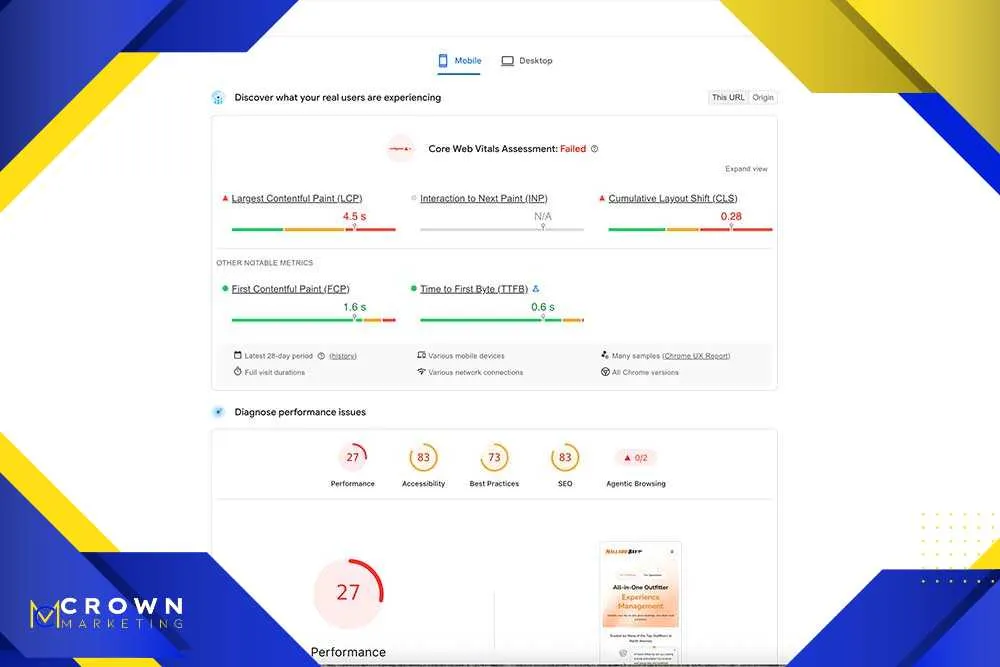
Find out what you are risking first
Before any design work we pull rankings, traffic, conversions and top landing pages. Often the pages earning the most are not the ones anyone internally thinks about, and they are exactly the ones a redesign is most likely to damage. Knowing this changes the plan.
Redirects are built before launch, not after
Every URL on the current site gets mapped to a destination on the new one, and the map is tested on staging before anything goes live. Doing this in the week after launch, which is how most agencies handle it, means Google has already recrawled a site full of dead ends.
Do not delete content because it is long
The most common self inflicted wound in a redesign is cutting a two thousand word page to three hundred because the new template looks better that way. That page was ranking on the strength of what it said. Design should adapt to the content that works, not the reverse.
Fix conversion while you are in there
Redesigns are usually justified by appearance and paid for by leads. Since the site is being rebuilt anyway, this is the cheapest moment to fix the buried phone number, the eleven field form and the service pages that never actually asked for the call.
Launch on a Tuesday morning, not a Friday night
Boring and it matters. Launch when everyone is available for the next two days, not going into a weekend. The first forty eight hours are when redirect gaps, form failures and tracking mistakes surface, and they are trivial to fix if someone is watching.
Watch closely for a month
Search Console coverage, crawl errors, rankings on the pages that mattered, form submissions and call volume. Some fluctuation after a launch is normal. A decline that is still there in week four is a problem, and finding it in week one is far cheaper than finding it in month three.
Recent reading from our team
Written by our team, not spun by a tool. Everything we publish is something we do for clients.