Woman-Owned & Veteran-Owned40+ Years Combined ExperienceLas Vegas, NevadaNo Contracts, Ever

Web & Digital Services Company

Shopping Ads And Microsoft Ads Management

Shopping Ads And Microsoft Ads Management2026-09-17T23:48:36+00:00

Shopping ads that show the right products, and Microsoft ads that cost less

In Shopping, the feed is the campaign. There are no keywords to write. Google decides which searches your products appear for based almost entirely on the titles, attributes and images you send it, which means a neglected feed quietly limits everything downstream no matter how the bidding is managed.

Microsoft Ads is the other half of this page and the more commonly skipped one. It is smaller, the clicks are meaningfully cheaper, and for B2B and older demographics it converts well. What it is not is a copy paste of your Google account, which is why most imported Microsoft accounts underperform and then get abandoned.


A product feed being cleaned for Google Shopping campaigns

Six parts of Shopping and Microsoft management

Two platforms, one principle: fix the inputs before touching the bids.

Feed Build And Cleanup

Titles rewritten to include the words people actually search, attributes filled in, GTINs corrected, and disapprovals cleared. Most feeds we inherit have products silently not showing at all.

  • Titles written for search
  • Attributes and GTINs completed
  • Disapprovals cleared and monitored

Structure By Margin

Not every product deserves the same bid. Campaigns split by margin and price band so your best sellers are not funding the ones you barely profit on.

  • High margin ringfenced
  • Loss leaders capped
  • Seasonal splits where useful

Negative Terms And Query Control

Shopping has no keywords but it does have search terms. Weekly review, negatives applied, and priority settings used to steer traffic to the campaigns that should catch it.

  • Search terms read weekly
  • Negatives applied by campaign
  • Priority tiers used deliberately

Promotions And Annotations

Sale price annotations, promotions, shipping and returns detail. The free signals under the listing move click through rate more than another bid increase will.

  • Merchant promotions live
  • Shipping and returns configured
  • Sale annotations kept current

Microsoft Ads, Rebuilt

Imported, then rebuilt for a different auction. Different competition, different match type behavior, different audience. Handled properly it is often your cheapest cost per lead.

  • Rebuilt, not blindly imported
  • Audience targeting used
  • Usually the cheapest clicks

Reported On Return

Return on ad spend by product group and by campaign, plus which products are eating budget without converting. Not a screenshot of total revenue.

  • Return by product group
  • Budget wasters named
  • Monthly written commentary

What Shopping and Microsoft management involves

Different inputs to search campaigns, same discipline.

Reviewing Shopping campaign performance by product margin

Start in Merchant Center, not the ad account

Before a single bid is set we look at how many products are actually eligible to serve. Disapprovals, missing attributes, image problems and price mismatches routinely take a fifth of a catalog out of the auction without anyone noticing. Fixing that is free reach.

Titles are the keywords you are allowed to write

Shopping matches on the feed, and the title carries most of the weight. Brand, product type, key attribute, size or model, in the order a person would search it. Rewriting titles across a catalog is unglamorous work that regularly moves impressions more than any bidding change.

Split by margin so bidding can be honest

When every product sits in one campaign, the algorithm optimizes toward whatever converts most easily, which is often your thinnest margin item. Splitting by margin and price band lets you bid what each group is actually worth and stops the cheap products consuming the budget.

Performance Max needs the same guardrails here

PMax carries most Shopping inventory now, and it will happily spend on brand terms you were already winning. We use brand exclusions, split asset groups by product group, and keep enough visibility to know what is being bought.

Microsoft is a rebuild, not an import

The import button exists and it is where most Microsoft accounts go to die. Match types behave differently, the competition is different, and audience targeting is stronger. We import as a starting point and then rebuild structure, negatives and bids for that auction specifically.

Judged on return, product by product

Total revenue hides everything. The report shows return by product group, which products are spending without converting, and what we are changing. If a category cannot make the maths work, we would rather cut it than average it into a healthier looking total.
Why clients stay with us

We are a small team on purpose. The person cleaning your feed is the person managing the bids on it.

  • Two owners on your account, every month, for the life of the engagement
  • Flat monthly fee, never a percentage of your ad spend
  • 40+ years of combined experience across paid search, ecommerce and web
  • Merchant Center and ad accounts stay in your name
  • Month to month, no long term contracts

Case Study

Webster & Garino LLC

An Indiana law firm with an established brand and almost no organic presence. We rebuilt the site on WordPress, produced content and video at volume, fixed the technical foundation and built a real internal linking strategy.

+2,000%
Website traffic
+90%
Conversions

Clients across the country, and the reviews to back it up

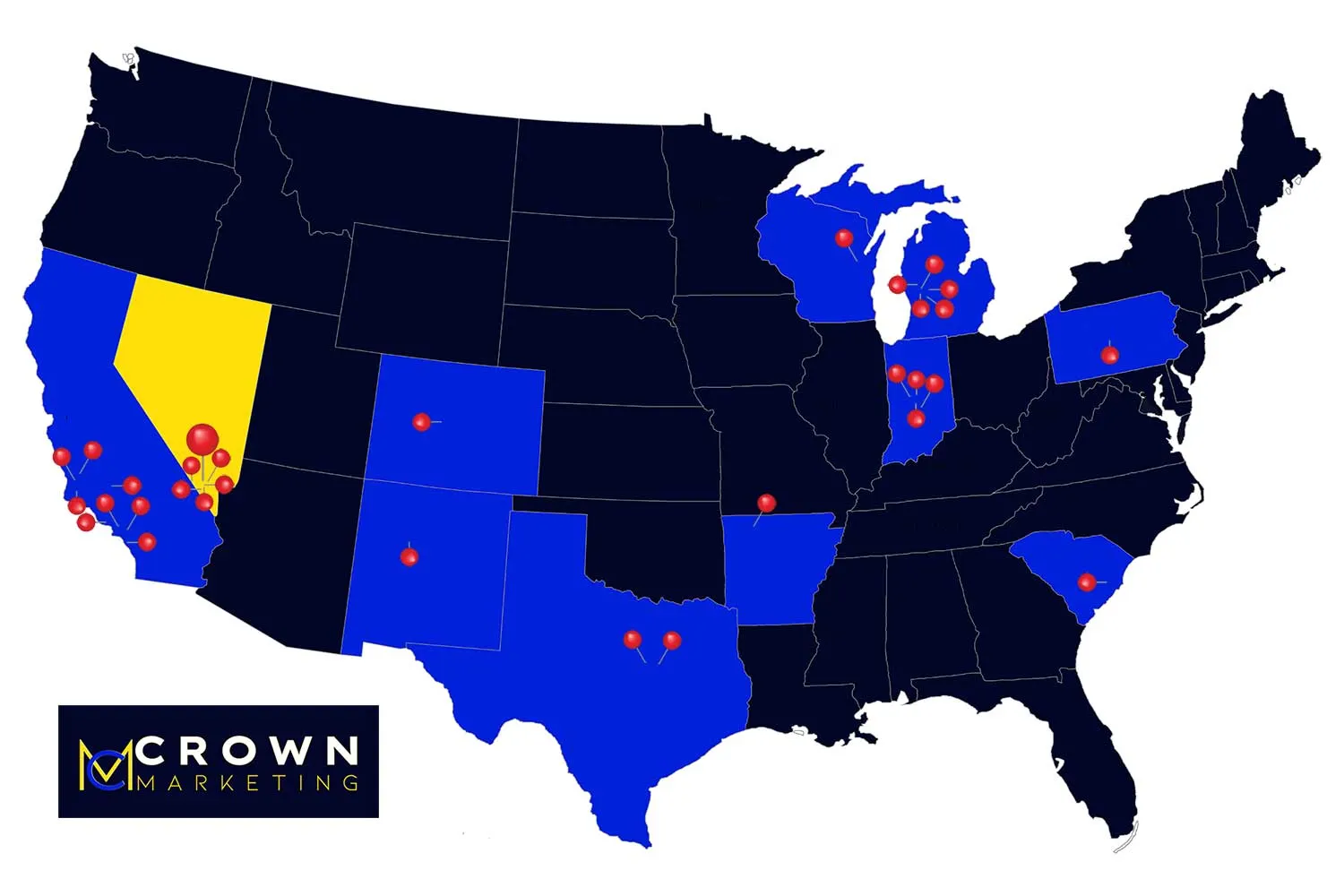
Every review is from a real client and every pin is a real market. We are based in Las Vegas and we run campaigns for clients in cities all over the country. The signals search engines read are the same everywhere, so the playbook travels.

Map of the United States showing the markets Crown Marketing runs local SEO campaigns in

Frequently asked questions about Shopping and Microsoft Ads

The things people ask on the first call, answered before you make it.

Not usually. Most platforms export a feed we can work with, and rules inside Merchant Center or a feed tool handle the rest. We only involve a developer when the source data itself is missing fields the store never captured.
Almost always disapprovals, missing required attributes, image issues, or a price and availability mismatch between the feed and the live page. It is the first thing we check and it is commonly a meaningful share of the catalog.
For most B2B and for consumer categories skewing older, yes. Volume is a fraction of Google but clicks are often significantly cheaper and competition is thinner. It rarely deserves the majority of budget and it frequently deserves some.
You can, and it is a starting point rather than a strategy. Imported accounts usually underperform because match types, competition and audience behavior differ. We rebuild after importing.
Often yes, with brand exclusions and asset groups split by product group. Without those it takes credit for traffic you already had and gives you very little visibility into what it is buying.
It depends entirely on margin. A four to one return is excellent for some catalogs and unprofitable for others. We work backwards from your actual margin rather than quoting an industry number that means nothing for your business.
Yes, and it stays in your name with us on access. Feed monitoring, disapproval alerts and policy issues are part of ongoing management, not an extra.
The Microsoft half is. Shopping needs a product catalog, so it will not apply, but a rebuilt Microsoft search account is often one of the cheapest sources of leads a service business can add.
Continuously for disapprovals and weekly for performance. Catalogs change, prices change, and a feed that was clean last quarter will not be clean this quarter.
Go to Top