Case studies with the actual numbers left in
Every agency site has a results page. Most of them are a logo wall and a percentage nobody can source. We would rather show you the client, the situation, what we actually did, and what the data said afterward, including the months that went backwards and the numbers we decided not to print.
Three named clients who agreed to be named. Where a figure comes from Semrush we say which database and which two dates, so you can check it. Where the honest answer is that the data will not support a number, we say that instead of inventing one, and you will find exactly that on the garage door study below.

Every number has a source and two dates
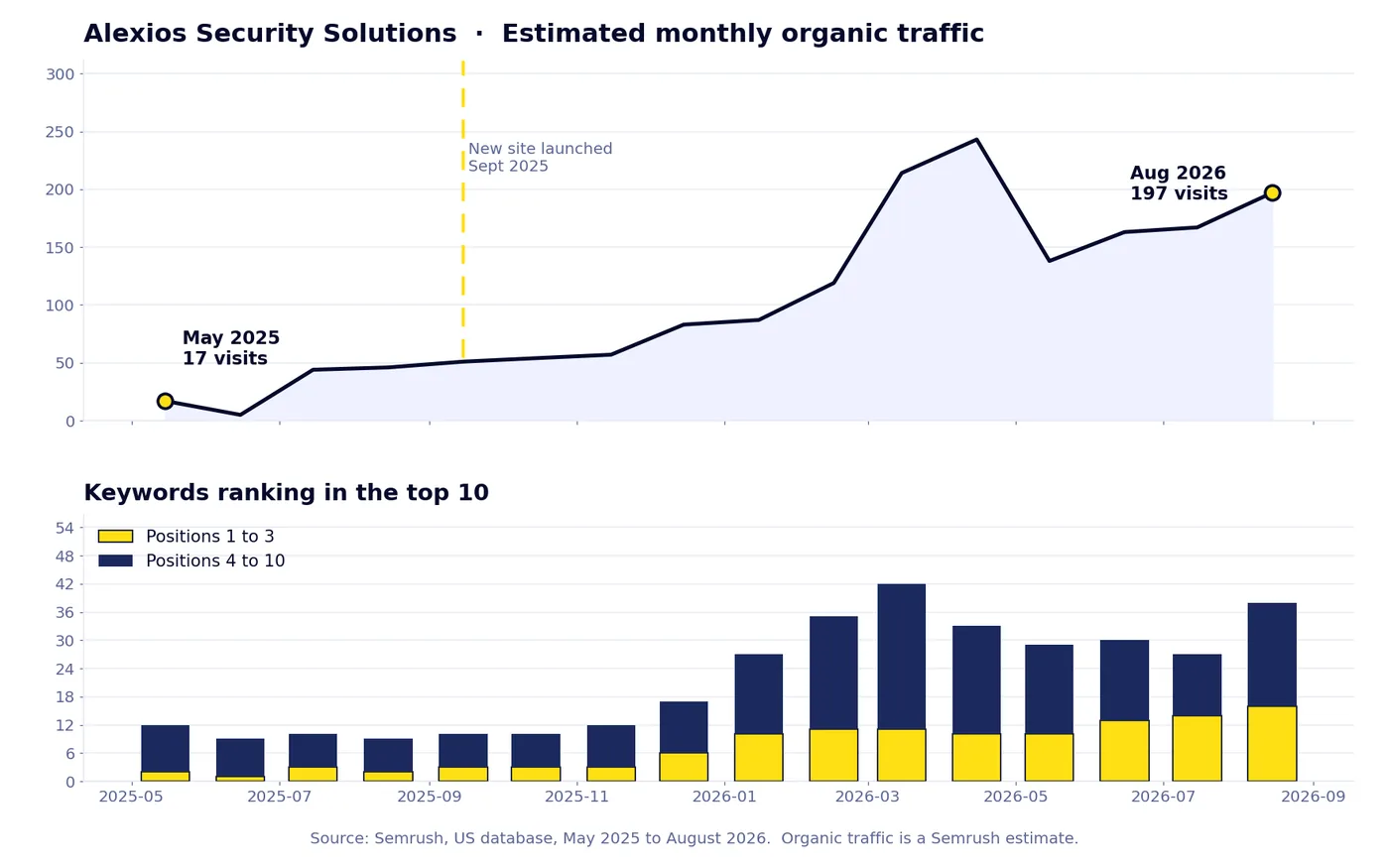
A percentage with no time period attached can mean anything. Where we quote traffic, keywords or rankings, we name the tool, the database and the two dates being compared. Semrush ranking data is directly checkable. Where a figure comes from a client’s own analytics instead, we say that too.
We say when an estimate is an estimate
Semrush models organic traffic from positions and search volumes. It is directionally useful and it is not a bank statement. Ranking positions are observable fact. We label which is which on every page rather than blending them into one impressive sounding number.
The client agreed to be named
Nobody appears here without permission. Several of our clients are not on this page because they would rather not be, which is entirely their call. We do not publish anonymized studies dressed up to look named.
Numbers we cannot stand behind do not get printed
The garage door study has no traffic figure on it. Semrush’s estimate for that domain in August was several times what the underlying keyword data supports, so we left it out and explained why on the page. It would have been the most impressive number on this site.
The work is described, not just the outcome
A result with no explanation is a claim. Every study says what we actually did, in what order, and over what period. If the approach would not transfer to your business, you should be able to work that out from reading it rather than from a sales call.
We include what we would do differently
Two of these three studies say we should have installed tracking earlier. Not every part of every engagement lands, and a results page where everything worked first time is a sales document rather than a case study.
Recent reading from our team
Written by our team, not spun by a tool. Everything we publish is something we do for clients.