Woman-Owned & Veteran-Owned40+ Years Combined ExperienceLas Vegas, NevadaNo Contracts, Ever

Web & Digital Services Company

Shopify Web Design And Store Optimization

Shopify Web Design And Store Optimization2026-09-17T23:27:56+00:00

Shopify design and optimization without moving you off Shopify

If you already run a healthy Shopify store, an agency telling you to rebuild it in WooCommerce is usually telling you what suits them. Shopify handles hosting, security, PCI compliance and checkout reliability, and for a lot of merchants that is worth the platform fee and the constraints that come with it.

What we do is make the store you have work harder. Collection structure that can actually rank, product pages that answer the questions killing your conversion rate, a theme customized rather than fought with, and the speed problems that come from six years of accumulated apps. If we ever think you genuinely should move platforms, we will explain why rather than assume it.


Customizing a Shopify theme for collection and product page conversion

Six parts of Shopify work

Ordered roughly by how much revenue each one usually moves.

Collection And URL Structure

Shopify’s URL conventions and collection logic have real SEO consequences. Structuring collections, tags and navigation properly is the highest leverage work on most stores.

  • Collections built to rank
  • Tag and filter handling
  • Navigation that matches search

Product Page Conversion

Sizing, materials, delivery time, returns, and social proof placed where the hesitation happens. Most Shopify product pages are a photo, a price and a hope.

  • Objections answered on page
  • Reviews surfaced properly
  • Cross sells that make sense

Theme Customization

Working with your theme rather than around it. Custom sections your team can rearrange, so merchandising changes do not need a developer every time.

  • Custom sections, editable
  • Built inside the theme
  • Documented for your team

Checkout And Cart

Cart drawer behavior, shipping thresholds shown early, upsells that do not annoy, and the abandoned cart flow actually configured rather than left at default.

  • Costs visible early
  • Sensible cart upsells
  • Abandonment flow configured

App Audit And Speed

Apps are the main reason Shopify stores get slow. Most stores are paying monthly for apps that are doing nothing except adding scripts to every page load.

  • Unused apps removed
  • Script load reduced
  • Core Web Vitals improved

Shopify SEO

Metadata, schema, image handling, blog structure and the duplicate content that Shopify’s collection and variant URLs produce by default.

  • Product and collection schema
  • Variant duplication handled
  • Metadata written, not generated

Getting more out of the Shopify store you already have

Constraints and all, most stores have significant room before the platform is the limit.

Reviewing a Shopify store for speed and checkout friction

The platform is rarely the bottleneck

Merchants often assume their conversion problem is Shopify. It almost never is. It is collection structure, product pages that do not answer questions, a slow theme carrying eleven apps, and an abandoned cart email that was never turned on. All of that is fixable without a migration.

Collections are your category pages

In search terms, collections do the job category pages do everywhere else, and Shopify’s defaults are not built with that in mind. Getting collection titles, descriptions, URLs and internal links right is usually the single largest organic gain available on a Shopify store.

Apps are where the speed went

Every app injects scripts, and stores accumulate them for years without anyone removing the ones that are no longer used. Auditing what is installed, what it costs monthly, and what it adds to page weight typically finds both a speed win and a saving on the subscription bill.

Product pages have to sell without a salesperson

The questions your support inbox answers repeatedly are the questions costing you sales from people who never bothered to ask. Sizing, compatibility, delivery time and what happens when it is wrong belong on the page, above the fold where possible.

Turn the flows on

Abandoned cart, browse abandonment and post purchase flows are the cheapest revenue in ecommerce and a large share of stores are running them at default settings or not at all. Set up properly, they recover a meaningful percentage of carts that were otherwise gone.

We will not move you for the sake of it

Migrating a functioning Shopify store to WooCommerce is expensive, risky for rankings, and mostly benefits the agency doing it. If your volume, margin or customization needs genuinely justify a move we will make that case with numbers. Otherwise we improve what you have.
Why clients stay with us

We are a small team on purpose. You get owners who will tell you when the answer is do less, not migrate.

  • Two owners on your store, every month, for the life of the engagement
  • We work in your Shopify account, and it stays entirely yours
  • 40+ years of combined experience across ecommerce, SEO and paid
  • No migration pitch unless the numbers actually support one
  • Month to month, no long term contracts

Case Study

Webster & Garino LLC

An Indiana law firm with an established brand and almost no organic presence. We rebuilt the site on WordPress, produced content and video at volume, fixed the technical foundation and built a real internal linking strategy.

+2,000%
Website traffic
+90%
Conversions

Clients across the country, and the reviews to back it up

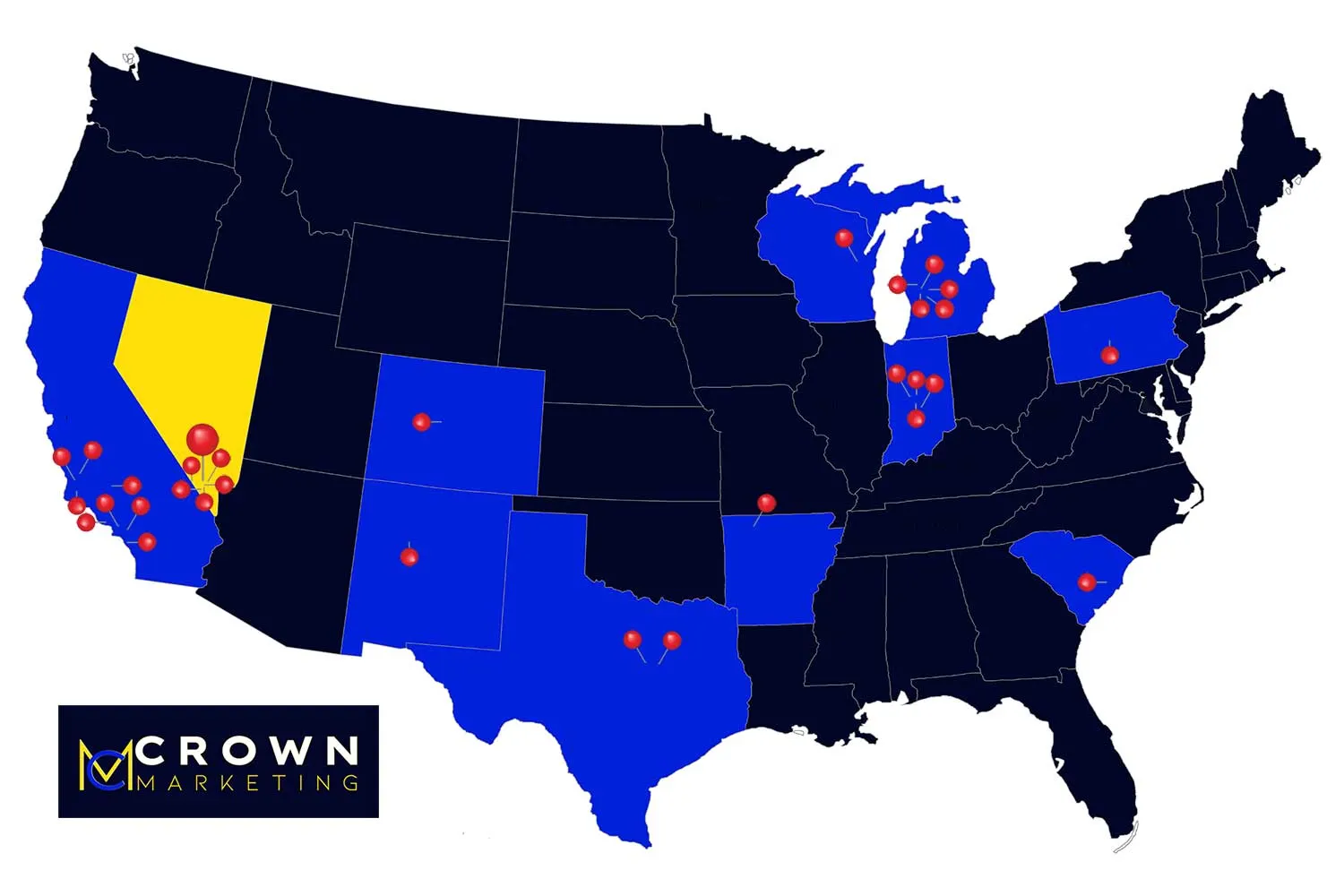
Every review is from a real client and every pin is a real market. We are based in Las Vegas and we run campaigns for clients in cities all over the country. The signals search engines read are the same everywhere, so the playbook travels.

Map of the United States showing the markets Crown Marketing runs local SEO campaigns in

Frequently asked questions about Shopify

The things people ask on the first call, answered before you make it.

Usually not. Shopify handles hosting, security and checkout reliability, and those are real costs you would take on. Migration makes sense when you need customization Shopify blocks, or when platform and app fees genuinely outweigh the maintenance burden of self hosting.
No, with some structural quirks. Collection and variant URLs can generate duplication, the URL structure is fixed in ways that are occasionally annoying, and blog functionality is basic. All of it is workable and none of it stops Shopify stores ranking well.
Apps, almost always, followed by oversized images and a heavy theme. An app audit usually finds several installed apps loading scripts on every page that nobody has used in a year.
We customize existing themes with custom sections rather than building from scratch in most cases. Fully custom themes cost considerably more and make future Shopify updates harder to absorb. We will build one when the brand genuinely requires it.
Yes. Plus adds checkout customization and scripting that open up conversion work not available on standard plans, and it is worth the step up only at real volume.
Yes, including products, customers, order history and URL redirects. As with any migration, the redirect map is what protects your rankings and it is the part that gets rushed most often.
Yes as part of ongoing work. Auditing what is installed, what it costs and what it adds to load time is worth doing at least annually, and it usually pays for itself in cancelled subscriptions.
Yes. Shopping campaigns, paid search and paid social, using the same product data that drives organic. Having one team on both means the feed gets built once and used twice.
Optimization projects usually run between roughly 3,000 and 12,000 depending on scope. Ongoing monthly work is priced flat. We will scope the highest impact items first so you can stop when the returns flatten.
Go to Top